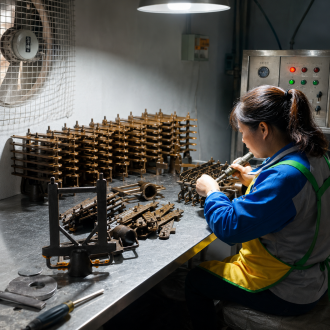
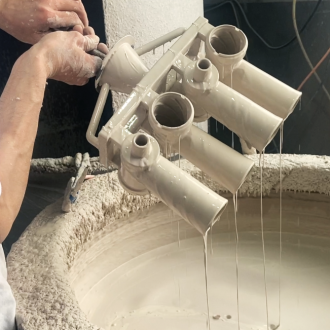
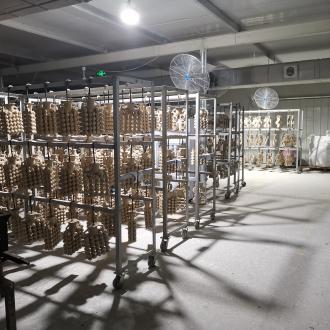
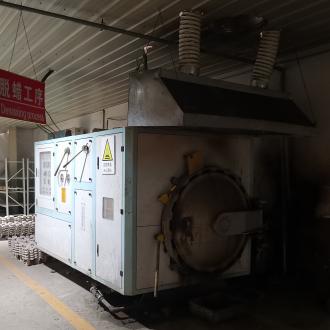
Wax pattern making is an important step in the investment casting process. Before wax tree assembly, shell making and metal pouring, each casting part first needs a wax pattern that matches the final product design.
The quality of the wax pattern can affect casting dimensions, surface quality and process stability. For custom stainless steel, carbon steel and alloy steel castings, good wax pattern control helps reduce defects and improve repeat production quality.
In investment casting, wax is injected into a mold to form a wax pattern. This wax pattern has the same basic shape as the final casting part.
After cooling and removal from the mold, the wax pattern is checked and repaired if needed. Then several wax patterns are assembled onto a runner system to form a wax tree for the next process.
Wax pattern making may look simple, but it is the starting point of the whole lost wax casting process. If the wax pattern has deformation, surface defects or dimensional problems, these issues may continue into later production steps.
Wax patterns directly influence the final casting shape. A stable wax pattern helps improve dimensional consistency and surface quality.
Poor wax pattern control may cause problems such as deformation, uneven surface, size variation, poor assembly fit or defects during shell making. For parts with holes, ribs, thin walls or complex structures, wax pattern quality becomes even more important.
For repeat orders, wax pattern consistency is also important. One good sample is not enough. The process must be stable for batch production.
The mold condition, wax temperature, injection pressure, cooling time and handling method can all affect wax pattern quality. If the wax is not injected properly, the pattern may have short filling, shrinkage, surface marks or deformation.
After wax pattern making, workers should check the shape, surface condition and key dimensions. Minor surface defects can be repaired before wax tree assembly, but serious deformation or size problems should be rejected.
For custom casting parts, the wax pattern should be reviewed according to the drawing, material requirement, wall thickness and tolerance requirement.
After inspection, qualified wax patterns are assembled onto the runner system. This step is called wax tree assembly.
Wax pattern making and wax tree assembly are closely connected. A good wax pattern makes assembly easier and helps keep the wax tree stable during shell making. If the wax pattern is weak, deformed or unstable, it may affect shell coating, drying and later metal pouring.
This is why wax pattern making should be controlled before the casting process moves to the next stage.
At Senjia Casting, wax pattern making is controlled according to customer drawings, samples and technical requirements. Before production, we review the part structure, material grade, wall thickness, tolerance requirement and production quantity.
Our team focuses on wax pattern shape, surface condition, dimensional consistency and repeatability. For custom investment casting projects, stable process control is important for both sample production and regular orders.
Wax pattern making is one of the first key steps in investment casting. It affects dimensional accuracy, surface quality, wax tree assembly and final casting quality.
Senjia Casting provides silica sol lost wax casting services for stainless steel, carbon steel and alloy steel parts. If you need custom investment casting parts, please send us your drawings, material grade, quantity and surface treatment requirements. Our team will review the casting feasibility and provide a quotation.
Contact: Terry Zhang
Phone: +86-13515399527 (Whatsapp/wechat)
E-mail: zhang@senjiagroup.com
Add: No 106 Jinqueshan Road, Linyi, China