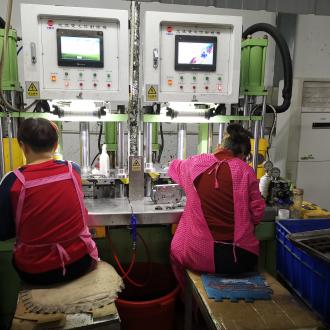
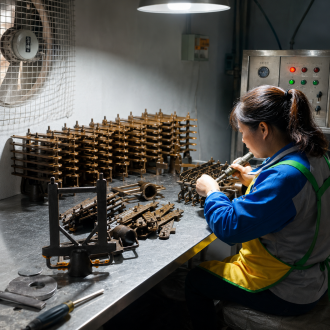
Shell making is a key step in the silica sol lost wax casting process. After wax tree assembly, the complete wax tree is coated with ceramic slurry and refractory sand to form a strong ceramic shell.
The quality of the shell directly affects surface quality, dimensional stability, metal pouring performance and final casting results. For custom stainless steel, carbon steel and alloy steel castings, stable shell making helps reduce production risks and improve repeat casting quality.
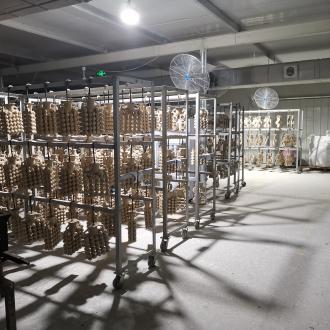
In investment casting, the assembled wax tree is repeatedly dipped into ceramic slurry and coated with refractory sand. After each coating layer, the shell needs to dry under suitable conditions.
This process is repeated several times until the ceramic shell reaches the required thickness and strength. The shell must be strong enough to withstand dewaxing, firing and metal pouring.
Shell making connects the wax pattern stage with the metal pouring stage. If the shell quality is not stable, casting defects may appear in later production.
A good ceramic shell helps protect the cavity shape and allows molten metal to fill the mold correctly. Shell quality can affect casting surface finish, dimensional accuracy, shell strength and defect control.
Poor shell making may cause shell cracking, deformation, rough surface, sand inclusion, incomplete filling or dimensional variation. These problems are often related to slurry quality, sand coating, drying condition, shell thickness and handling method.
For precision investment castings, shell making is not just a coating step. It is an important process control point before pouring.
Several factors should be controlled during shell making. The ceramic slurry must have suitable viscosity and stability so that it can cover the wax tree evenly. If the slurry is too thick or too thin, shell coverage and surface quality may be affected.
The sand coating should be uniform, especially around thin walls, holes, corners and complex structures. Uneven coating may create weak areas or poor shell strength.
Drying time and workshop conditions are also important. If the shell is not dried properly, it may crack during dewaxing or pouring. Stable drying helps improve shell strength and reduce production risk.
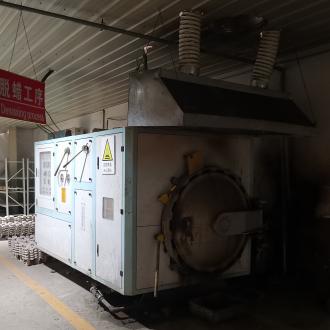
After shell making, the wax inside the shell must be removed. Then the ceramic shell is fired at high temperature before metal pouring.
If the shell is too weak, too thin or uneven, it may crack or deform during these steps. This can affect the final casting shape and surface quality.
Good shell making provides a stable mold cavity for molten metal. It helps reduce risks such as shell failure, surface defects and metal filling problems.
At Senjia Casting, shell making is controlled according to part structure, material grade, wall thickness and casting requirements. We review the wax tree condition before shell making and control coating, sanding and drying during production.
Our team focuses on ceramic shell coverage, shell thickness, drying stability and shell strength. For repeat orders, stable shell making is important for consistent casting quality.
Shell making is one of the most important steps in investment casting. It affects surface quality, dimensional stability, shell strength and final casting performance.
Senjia Casting provides silica sol lost wax casting services for stainless steel, carbon steel and alloy steel parts. If you need custom investment casting parts, please send us your drawings, material grade, quantity and surface treatment requirements. Our team will review the casting feasibility and provide a quotation.
Contact: Terry Zhang
Phone: +86-13515399527 (Whatsapp/wechat)
E-mail: zhang@senjiagroup.com
Add: No 106 Jinqueshan Road, Linyi, China