304 vs. 316 Stainless Steel Casting: An Engineer's Guide to Choosing the Right Alloy
When designing and sourcing stainless steel cast parts—whether for architectural hardware, marine fittings, or industrial valves—one of the most frequent dilemmas engineers face is choosing between 304 and 316 stainless steel.
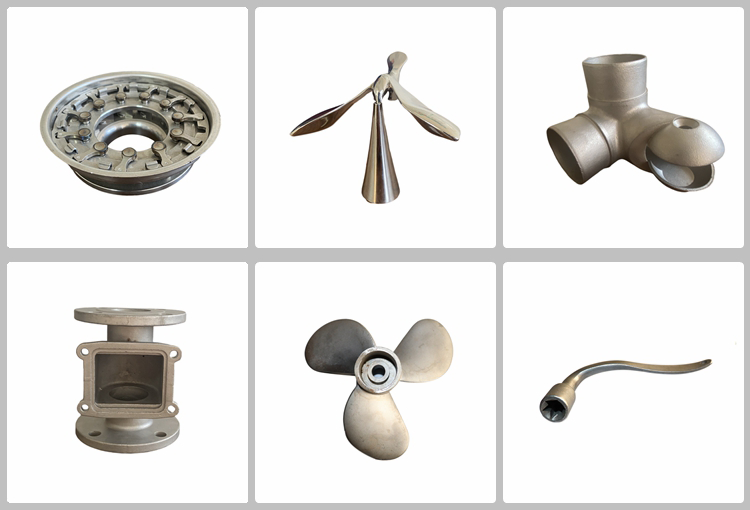
Visually, investment cast 304 and 316 parts look identical. However, their chemical
Here is a comprehensive engineering guide to help you specify the exact alloy your project requires.
The Chemical Difference: It's All About Molybdenum (Mo)
Both 304 and 316 are austenitic stainless steels, meaning they offer excellent formability, weldability, and toughness. They both contain high levels of Chromium (which creates a passive oxide layer to prevent rust) and Nickel.
The defining difference lies in a single, crucial element: Molybdenum (Mo).
304 Stainless Steel: Contains 18% Chromium and 8% Nickel (often called 18/8 stainless). It has no Molybdenum.
316 Stainless Steel: Contains 16% Chromium, 10% Nickel, and 2% to 3% Molybdenum.
Performance Showdown: Corrosion Resistance
The addition of Molybdenum in 316 stainless steel drastically changes how the metal behaves in aggressive environments.
When 304 is Sufficient (The
Best for: Indoor architectural hardware, standard commercial kitchen equipment, automotive parts, and structural components not exposed to extreme elements.
When 316 is Mandatory (The Marine Grade)The Molybdenum in 316 provides a specific defense mechanism against chlorides (found in sea salt and de-icing salts) and industrial solvents. Chlorides can attack 304 stainless steel, causing localized "pitting corrosion" that rapidly destroys the part.
Best for: Marine hardware (boat cleats, shackles), outdoor architectural glass spigots near the coast, chemical processing valves, and medical implants.
The Cost Factor: Is 316 Worth the Premium?
Because Molybdenum and Nickel are expensive commodities, 316 stainless steel raw
However, from a Total Cost of Ownership (TCO) perspective, specifying 316 for a coastal application is far cheaper than dealing with the replacement costs, labor, and brand damage associated with rusting 304 parts. Conversely, specifying 316 for an indoor door handle is an over-engineering mistake that needlessly inflates your unit price.
Why Investment Casting is Ideal for Both Grades
Regardless of whether you choose 304 or 316, the manufacturing process matters. Both alloys are notoriously difficult to machine due to work-hardening.
By utilizing precision investment casting (lost-wax process), we can achieve "near-net shape" with exceptional dimensional tolerances and smooth surface finishes (125 RMS). This drastically reduces the need for secondary CNC machining, saving you both time and machining costs, while providing a surface that is easy to polish to a mirror or satin finish.
Need Help Specifying Your Next Casting Project?
Choosing the right alloy and
>> Send us your CAD drawings or project requirements today for a free evaluation and quote.
Contact: Terry Zhang
Phone: +86-13515399527 (Whatsapp/wechat)
E-mail: zhang@senjiagroup.com
Add: No 106 Jinqueshan Road, Linyi, China